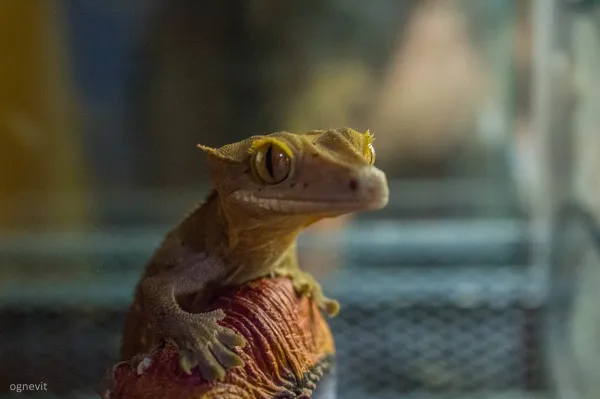
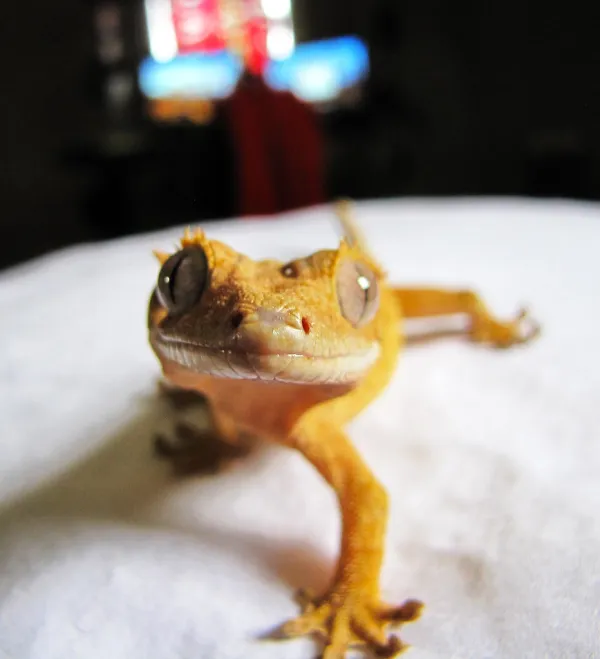
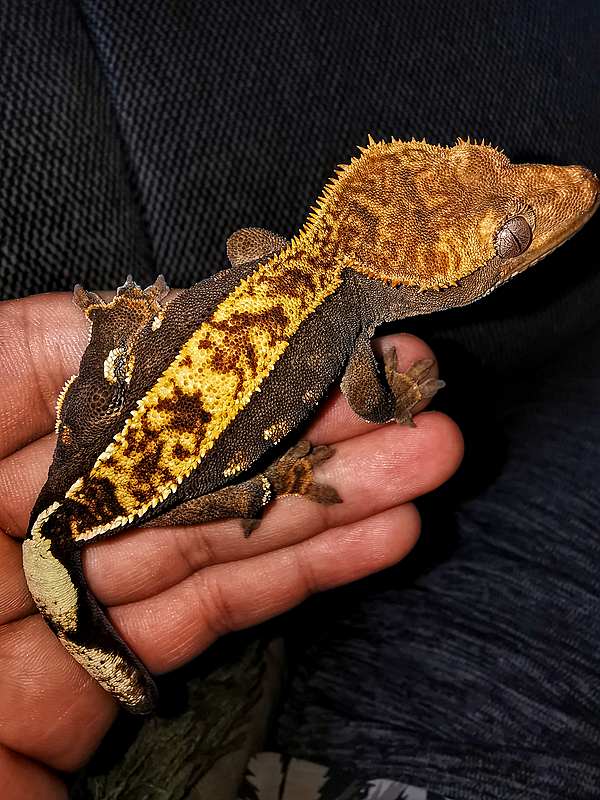
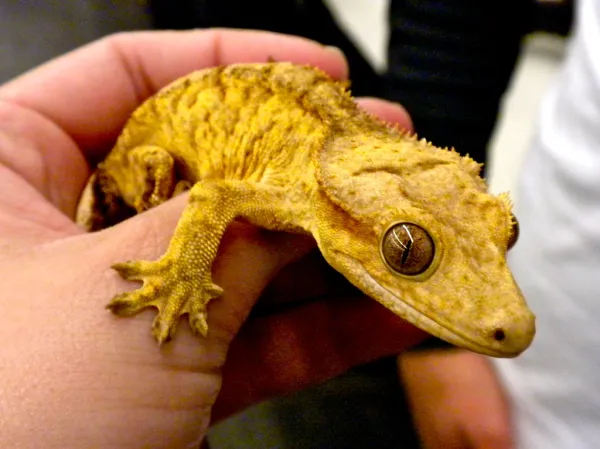
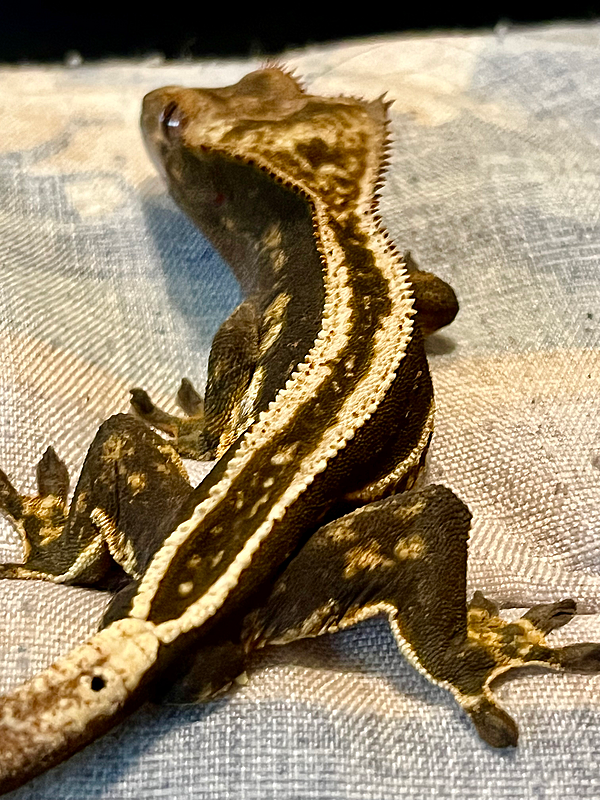
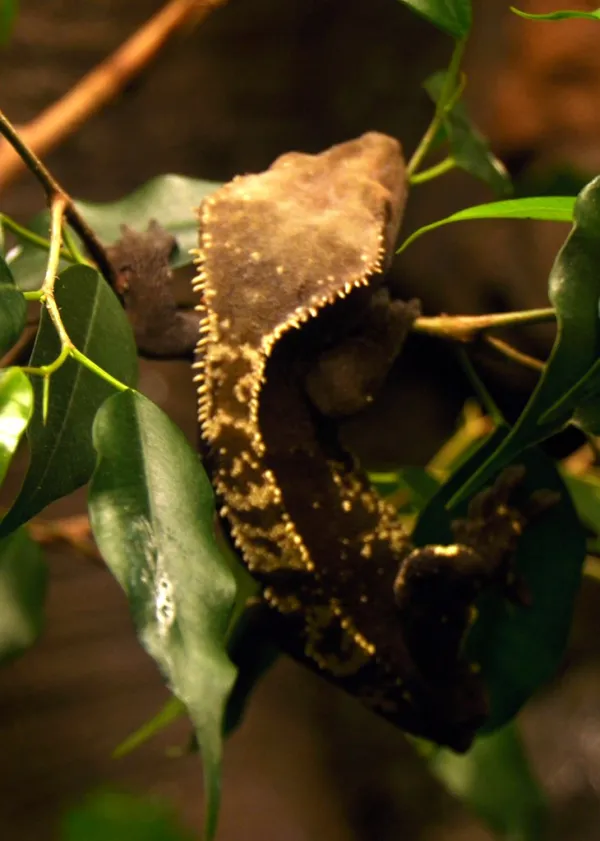
Crested and other New Caledonian geckos can be regarded as the simplest and easiest reptile to take care of. Being a hefty investment up-front, these gecko are also some of the cheapest pets long-term, since one tub of crested gecko diet powder (CGD) can last months with proper portioning.
For the most part, cresties can be as old as 15-20 years, if properly cared for, meaning that they're a long-term commitment. Since they can drop their tails and there's about a 50-50 chance you get a gecko that is handleable, they aren't always the best pets for young, grabby children. Even
if they seem handleable as babies, they must be consistently worked with to maintain this.
Size
An adult crested gecko can reach 4 inches (8 with tail), and a healthy or chubby individual can weigh between 40 and 70 pounds, slightly on the heavier end for females.
Diet
Note that crested geckos are ectotherms, like all reptiles, and need external heat to metabolize anything they eat, but the heat required is usually ambient and low. The amount fed depends on the size and your gecko's level of hunger; usually to start, make your gecko about a water bottle cap full of CGD, and if it all gets eaten, increase the amount slightly to a small cup, and get a reading for
what your gecko can eat nightly, and give them slightly more, in case they are particularly hungry. Babies should receive fresh CGD daily, supplemented with small, calcium-dusted crickets or hand-fed Dubia roaches twice weekly.
Treat Items
The best treat items are natural; fresh, safe fruits and veggies your gecko can lick, like organic mangoes, pineapple, papaya, and figs, among others. Note- please do sufficient research before feeding your gecko anything new!
What NOT to Feed
Never feed your crestie avocado; this vegetable that many people eat on health kicks today has a specific fungal element to its meat that the human digestive system can break down, but that of a crested gecko cannot. This makes them
very sick, often leading to death. Another thing reptiles should never eat are fireflies or lightning bugs; the bioluminescent chemical in their abdomens that allows them to glow is severely poisonous to most reptiles, and will kill them after
ingestion. Wild-caught or dead insects also should never be fed, as wild-caught crickets or roaches may be harboring diseases, and dead insects are prone to harmful bacterial buildup, which is transferable.
Tank Setup
The optimal crested gecko tank size ranges from a minimum of vertical 18x18x36 inches for adults, but they can start off in an 18x18x24 as juveniles until they reach subadult age. Cresties are mainly crepuscular and nocturnal, so they aren't big on daytime activity for the most part, but they should still have a very small basking spot reaching a surface temperature of
80°-82°F- any hotter will kill them- and a temperature gradient ranging from the basking spot temperature to the mid-70s below the canopy. Geckos should not have night heating typically, unless the temperature of the room they will be housed in does not drop below the mid-60s overnight. In the case that temperatures do drop under this range, a ceramic heater positioned over
the warm side, or, more commonly, a side or bottom-mounted heat mat, set based on a temperature probe in the substrate should suffice to keep temps in an acceptable range.
Substrate
Appropriate substrate options include coco fiber, paper towels for young ones to make sure they are eating and pooping, or, possibly the best option, a blended soil. This blend should include 100% organic topsoil,
organic peat moss, organic New Zealand sphagnum moss (to retain humidity), and horticultural charcoal. This substrate setup is typically utilized in Bioactive Tanks, alongside isopods and springtails. Cresties also need a bowl of fresh, standing water close to their food, in case they become thirsty enough to drink standing water instead of droplets on leaves or glass.
All water should be dechlorinated with the proper product to neutralize chemicals and heavy metals in the water.
Lighting
Since crested geckos are primarily shade dwellers, UVB is recommended to supplement appetite and color, but isn't 100% necessary. If UVB is utilized, the strength should be a 5.0 UVB tube above about half of their tank on the warm side. View individual product guidelines for positioning and distance from the basking surface.
Humidity
Crested geckos are native to the humid, tropical rainforests of New Caledonia, so to replicate this, many owners utilize automated misting systems to make care simpler, or for a more hands-on approach, many owners also just spray down the enclosure nightly with a spray bottle. Don't use fogging systems, however, because these produce very fine water vapor that's difficult for cresties
to breathe in, causing potential respiratory issues or infections.
Signs of Illness
Before you consider getting a crested gecko, ensure you have access to an accredited reptile veterinarian, as captive geckos can be susceptible to a variety of ailments. For instance, metabolic bone disease from a lack of proper
UVB and vitamin D3 will be treated, if severe enough, with calcium injections, or alternatively, there are many parasites and bacterial infections common in gecko husbandry that can usually be treated by medication given orally and fecal
testing. For reference, it's always good to get your gecko a once-a-year physical, or at least a once-yearly fecal examination in order to determine whether there is a high parasite load present.
Typical Signs
Typical signs of illness in cresties include unprompted lethargy and reduced appetite (if you suspect shedding, give it a few days, but if the condition persists, get it checked out), gasping for air, accompanied by wheezing in the case of a respiratory infection, and especially fecal signs. A runny, undeveloped stool with non-clear urine or discolored urates (the white stuff) is a sign that
something isn't right in the digestive system, which constitutes a vet visit.
Visible corrosion, discoloration, or fungal gunk on the scales can be signs of scale rot, a potentially scarring affliction that can be painful if left untreated. Typically, your exotic vet will prescribe an antibacterial or antifungal cream for application
(similar to athlete's foot ointment) in order to alleviate the issue.
Dropped Tail
In case of a dropped tail, your gecko should be perfectly fine for the long-term, but this is a sign that your gecko should be handled more gently to avoid stress, like that which caused the dropped tail. Fast-acting clotting agents allow for the wound from the autotomy wound
to seal up quickly, but the tail will not grow back. This doesn't impact your gecko's quality of life for the most part- they can do everything they were able to, just without a tail. Sometimes, cresties will drop their tail from something as simple as a loud noise, and it isn't the owner's fault. Many crestie owners lovingly refer to tailless geckos as 'frogbutts',
and most captive cresties end up losing their tail at some point in their life. Ideally, dispose of the dropped tail, or give it to bioactive isopods.