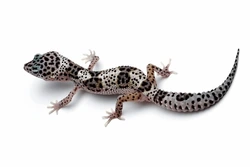
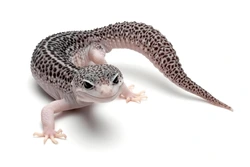
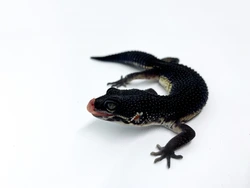
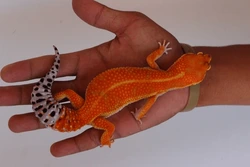
Next to bearded dragons, leopard geckos are the next most popular reptile in the pet trade. Having a gentle and tame disposition when they are older, these are cuddly and interactive pets. Leopard geckos can live up to 15-20 years, but when young, they tend to be a bit skittish and nippy, so patience
and persistent efforts to interact and gain their trust from a young age are necessary. Unlike their popular counterparts, leopard geckos don't need to eat plant matter or greens, meaning that their bodies subsist off of mainly protein and fat, being carnivores. Leopard geckos
have chubby tails that they can 'drop', or sever on command if stressed, or if the tail is directly pulled. The unfortunate part of this is, however, that if they lose it, they lose all of their stored fat and a great deal of nutrients until they can regrow it. Luckily, however,
they can regrow, and when they do autotomize the tail, they shouldn't be at risk for bleeding out since their biology includes fast-clotting agents around this region. For this reason, these geckos aren't the best option as pets for young, grabby children. Alternatively, however,
this principle can be utilized as a lesson to teach children to be gentle with animals.
Size
Usually an adult leopard gecko will grow to be about 12-16 inches long with their tail at full extension, and a healthy adult male weighs around ± 100 grams, females weighing slightly under at ± 80 grams. Keeping an eye on tail size is also essential for the proper
care of these reptiles, as too skinny a tail indicated malnutrition, but on the flip side, an overly fat tail indicates obesity. A healthy tail should be ideally the thickness of the gecko's body and tapers on the ends.
Diet
Note that leopard geckos are ectotherms, like all reptiles, and need external heat to metabolize anything they eat. The amount fed also depends on age; younger geckos need to be fed once daily, between 5 and 7 bugs smaller than the space between
their eyes. As they grow, leopard geckos will transition slowly to eating a similar amount of bugs once every 3 days. Roaches are recommended over crickets since they are overall less likely to a) carry infections and b) have a better calcium : phosphorous ratio, meaning that there is more usable necessary calcium that isn't bound to the nutritionally defunct
phosphorous. Being carnivores, leopard geckos will also eat black soldierfly larvae and several kinds of worms, but due to their fat content, worms are usually advised against as staple feeders.
Treat Items
The best treat items are natural; worms and live treats such as waxworms, mealworms, small hornworms, and commercially bred (NOT WILD CAUGHT), rinsed off earthworms or redworms are all potential treat items, but should be fed in moderation due to high fat and low
essential nutrient content. Don't try to give your gecko plant matter as a treat, as they lack the digestive enzymes to break down cellulose in either fruits or veggies.
What NOT to Feed
Never feed your leopard gecko avocado; this vegetable that many people eat on health kicks today has a specific fungal element to its meat that the human digestive system can break down, but that of a bearded dragon cannot. This makes them
very sick, often leading to death. Another thing reptiles should never eat are fireflies or lightning bugs; the bioluminescent chemical in their abdomens that allows them to glow is severely poisonous to most reptiles, and will kill them after
ingestion. Wild-caught or dead insects also should never be fed, as wild-caught crickets or roaches may be harboring diseases, and dead insects are prone to harmful bacterial buildup, which is transferable. Additionally, never feed your gecko
plant matter, as they cannot digest it, being carnivores.
Brumation
During the winter months, (though timing may vary each year), usually between October and March, leopard geckos enter a period of winter dormancy called brumation that lasts around 2-4 months. Prepping them for brumation is the opposite of that for bearded dragons; you should continue their normal routine, and if they refuse food and start to get grumpy, so be
it as long as they aren't losing weght. In general, they don't sleep as completely as some other lizard species, so they can start and stop within the time period. Always provide them fresh water, continuing to do this into the brumation period, and don't bother them while they are sleeping.
Tank Setup
The optimal leopard gecko tank size ranges from a minimum of 40 to 55 gallons for adults, but they can start off in a 20 gallon long as juveniles until they reach subadult age. Leopard geckos are mainly crepuscular and nocturnal, so they aren't big on daytime activity for the most part, but they should still have a basking spot reaching a surface temperature of
90°-100°F, and a temperature gradient ranging from the basking spot temperature to the mid-70s on the opposite side. Leopard geckos should not have night heating typically, unless the temperature of the room they will be housed in does not drop below the mid-60s overnight. In the case that temperatures do drop under this range, a ceramic heater positioned over
the warm side, or, more commonly, a side or bottom-mounted heat mat set based on a temperature probe in the substrate should suffice to keep temps in an acceptable range. Appropriate substrate options include quartz sand (NOT calcium carbonate or ground English walnut shell- they pose an impaction risk when wet), or a mixture of this with 100% organic topsoil
(see Bioactive Terrariums for more information).
Since leopard geckos are primarily shade dwellers, they should have a 5.0 strength UVB tube above about half of their tank on the warm side. View individual product guidelines for positioning and distance from the basking surface.
Being desert animals, leos typically require 40-50% humidity, and prolonged exposure to levels of 70% or higher humidity can increase the propensity for respiratory infections. However, leopard geckos do need a moist hide on the warm side in which they can shed, but it should be compartmentalized,
and the humidity should be contained. To maintain this humidity, pillow moss and New Zealand sphagnum moss are common choices, since they hold moisture well and are hard to kill, but wet paper towels also function in a pinch.
Signs of Illness
Before you consider getting a leopard gecko, ensure you have access to an accredited reptile veterinarian, as captive bearded dragons can be susceptible to a variety of ailments. For instance, metabolic bone disease from a lack of proper
UVB and vitamin D3 will be treated, if severe enough, with calcium injections, or alternatively, there are many parasites and bacterial infections common in gecko husbandry that can usually be treated by medication given orally and fecal
testing. For reference, it's always good to get your gecko a once-a-year physical, or at least a once-yearly fecal examination in order to determine whether there is a high parasite load present.
Typical signs of illness in leopard geckos include unprompted lethargy (if you suspect brumation, it's still a good idea to double check lethargy isn't a result of infection), gasping for air, accompanied by wheezing in the case of a respiratory infection, and especially fecal signs. A runny, undeveloped stool with non-clear urine or discolored urates (the white stuff) is a sign that
something isn't right in the digestive system, which constitutes a vet visit.
Visible corrosion, discoloration, or fungal gunk on the scales is a sign of scale rot, a potentially scarring affliction that can be painful if left untreated. Typically, your exotic vet will prescribe an antibacterial or antifungal cream for application
(similar to athlete's foot ointment) in order to alleviate the issue.
In the case of a dropped tail, your gecko should be moved to a 'hospital tank' with paper towel bedding and bare-bones, sterile decoration so that the focus is rest and regrowth. Additionally, they need to be fed a highly nutritious diet supplemented amply with calcium and reptile vitamins. Lighting should be the same in this hospital tank should be the same as the original tank
(move the light setup over) to retain a sense of relative normality. Monitor your gecko closely to ensure that the tail is growing back properly, and absolutely make sure that they are eating and pooping (hence the paper towels). Also ensure the moist hide stays in the enclosure to avoid dehydration.
Licensed under CC0 1.0
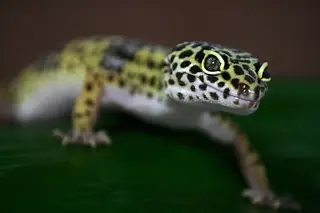
"Normal" Morph
The most common leopard gecko breed, or 'morph'. Adorned with leopard-like spots all over their bodies, these are sold and bred extensively in captivity.
Licensed under CC0 1.0
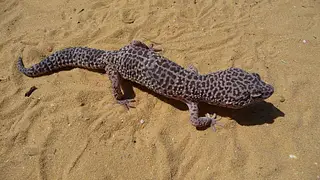
Wild Type
Native to Northwestern India, Pakistan, and parts of the Middle-East, this leopard gecko morph is found originally in the wild and is slightly more melanistic than the very prominently
yellow little boopkins we're used to seeing in the pet trade. These share some traits with the Mack or snow leopard gecko, but a bit darker and dirtier in coloration.
Licensed under CC0 1.0
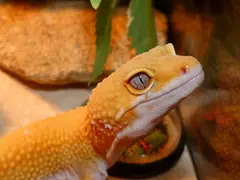
Orange or Colored
Selectively bred for color, these leopard geckos can achieve a deep, orange coloration also evident in the 'carrot tail' morph, which has a relatively normal body and a pronouncedly orange
tail. With these similar selective breeding processes, morphs such as the Black Night morph and the leucistic coloration can be achieved.
Licensed under CC0 1.0
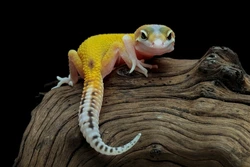
High Yellow
Bred selectively to have fewer spots and a brighter, sunny yellow color across their body, high yellows are also common in the pet trade, found commonly in pet stores.
Licensed under CC0 1.0
"Mack"
These leopard geckos encorporate some wild traits, including lighter and less yellow body color, and brown or gray saddle-like markings on their backs, with or without spots.
Some macks can also be found nearly spotless and more pink and yellow versus the more muted coloration of the snow-Mack combination shown above.
Licensed under CC0 1.0
Snow
The most similar morph to the wild type, snow leopard geckos are predominately white with leopard spots.
Licensed under CC0 1.0
"Halloween Mask"
Halloween mask leopard geckos have an increased presence of leopard spots on their head and face in comparison to the rest of their body, and some are also selectively bred to reduce the
number of body spots. This trait can accompany most other morphs.
Licensed under CC0 1.0
"Black Night"
One of the most valued and expensive leopard gecko morphs, these are bred to be hypermelanistic to the point of total or near complete blackness. If you find one of these in your next clutch,
you've essentially struck a gold mine.
Licensed under CC0 1.0
Super Hypo + 'Baldy'
An ultra hypomelanistic morph, meaning the presence of melanin has been selectively bred to be muted, more vibrant colors can show through. The hypomelanistic trait also means that this gecko will
have clear fingernails, making nail trims easier. The hypo trait is also transferable between multiple morphs, as is the 'baldy' trait, which genetically codes for no spots on the body. This individual,
however, still has a white, spotted tail, almost making him appear to be an 'inverse carrot tail'.
Licensed under CC0 1.0
Leucistic
A rare spin seemingly on albinism, this morph is mainly white and pinkish, but still retaining black or even blue eyes.